Atlas of Climate Change
The Big Picture
Concentrations and Temperatures
A Changing Planet
Emissions and Future Warming
Pathways to Change
The Big Picture
Concentrations and Temperatures
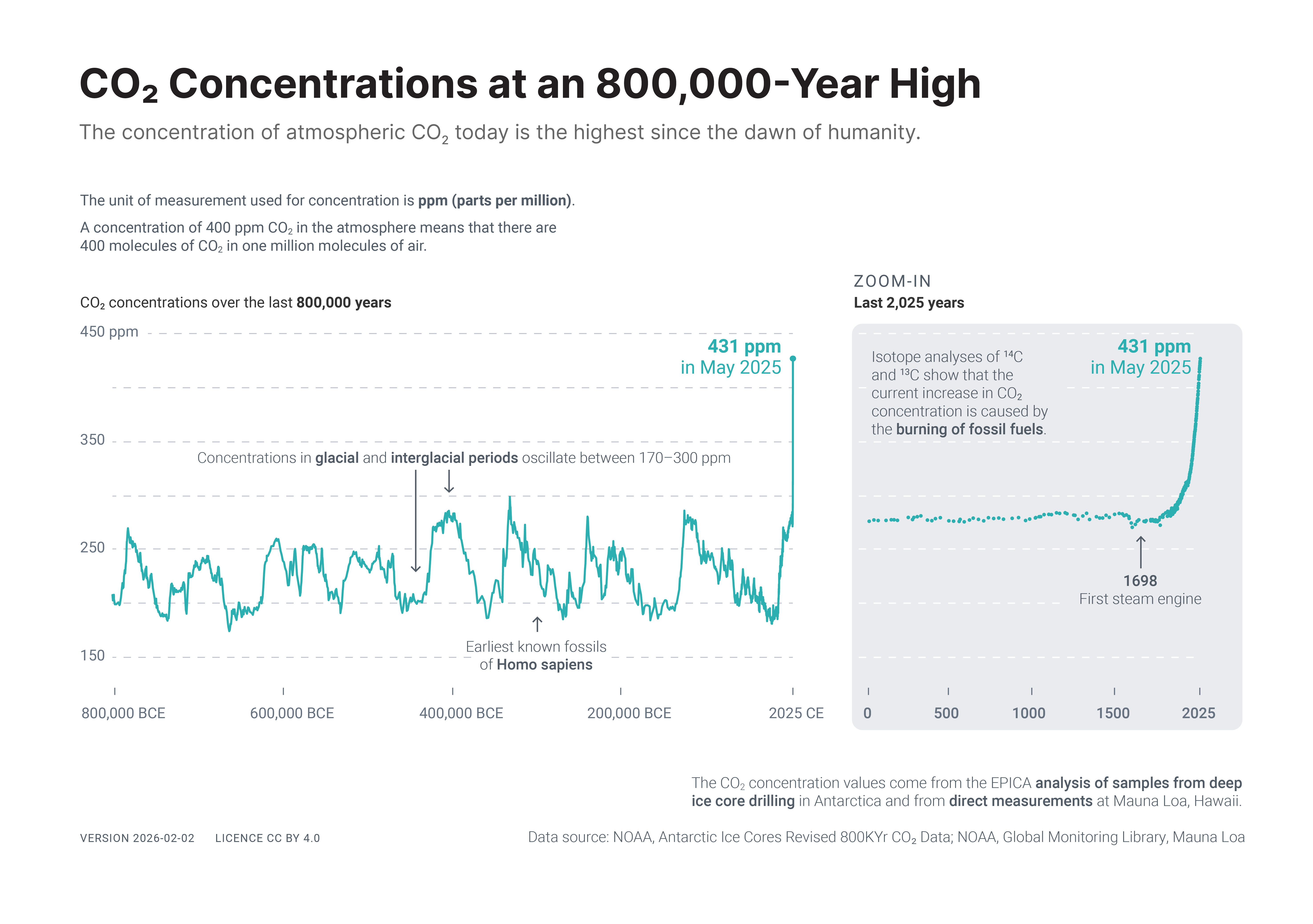
CO₂ Concentrations at an 800,000-Year High
The concentration of atmospheric CO₂ today is the highest since the dawn of humanity.
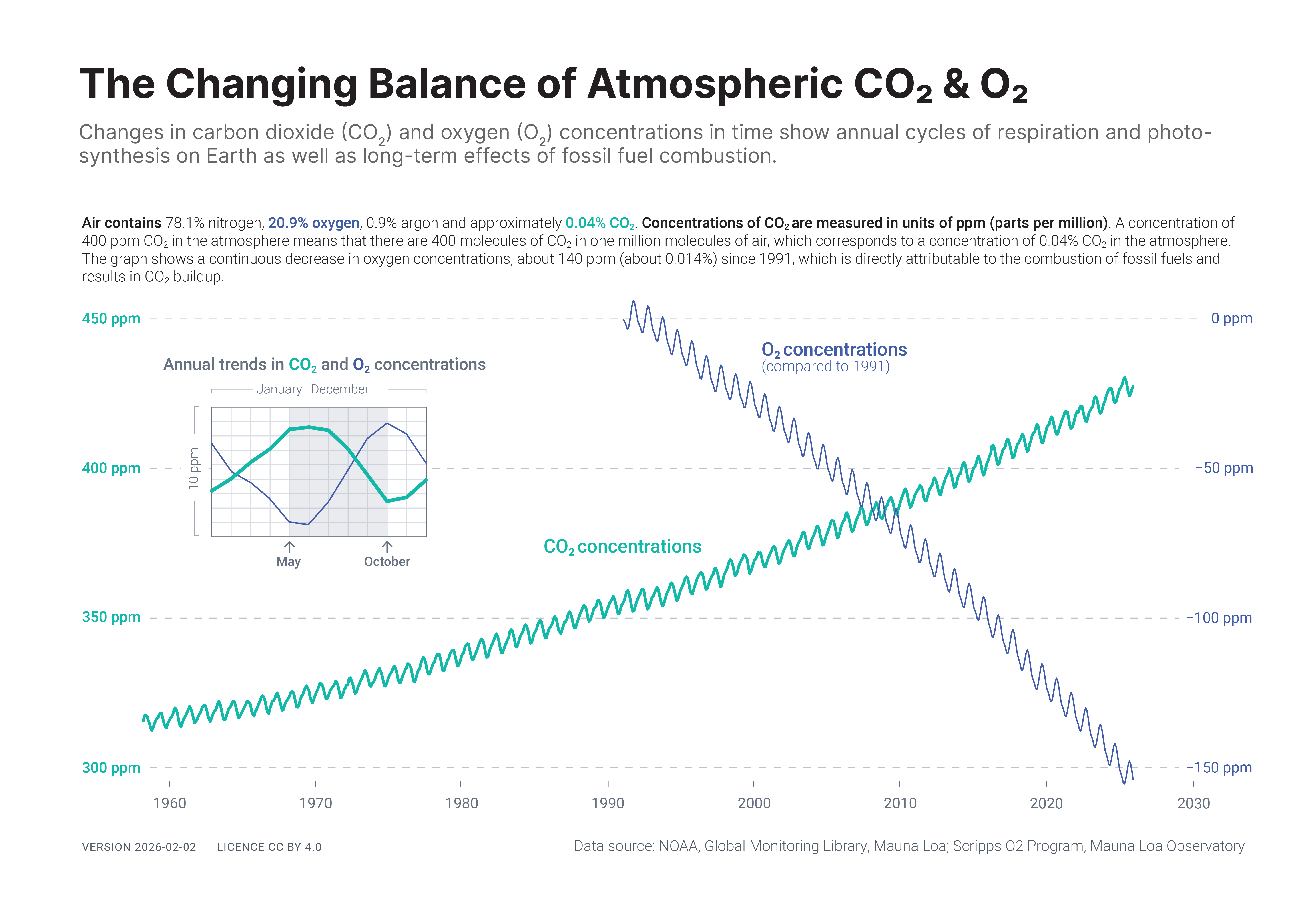
The Changing Balance of Atmospheric CO₂ & O₂
Changes in carbon dioxide and oxygen concentrations show annual cycles of respiration and photosynthesis, as well as the long-term effects of fossil fuel combustion.
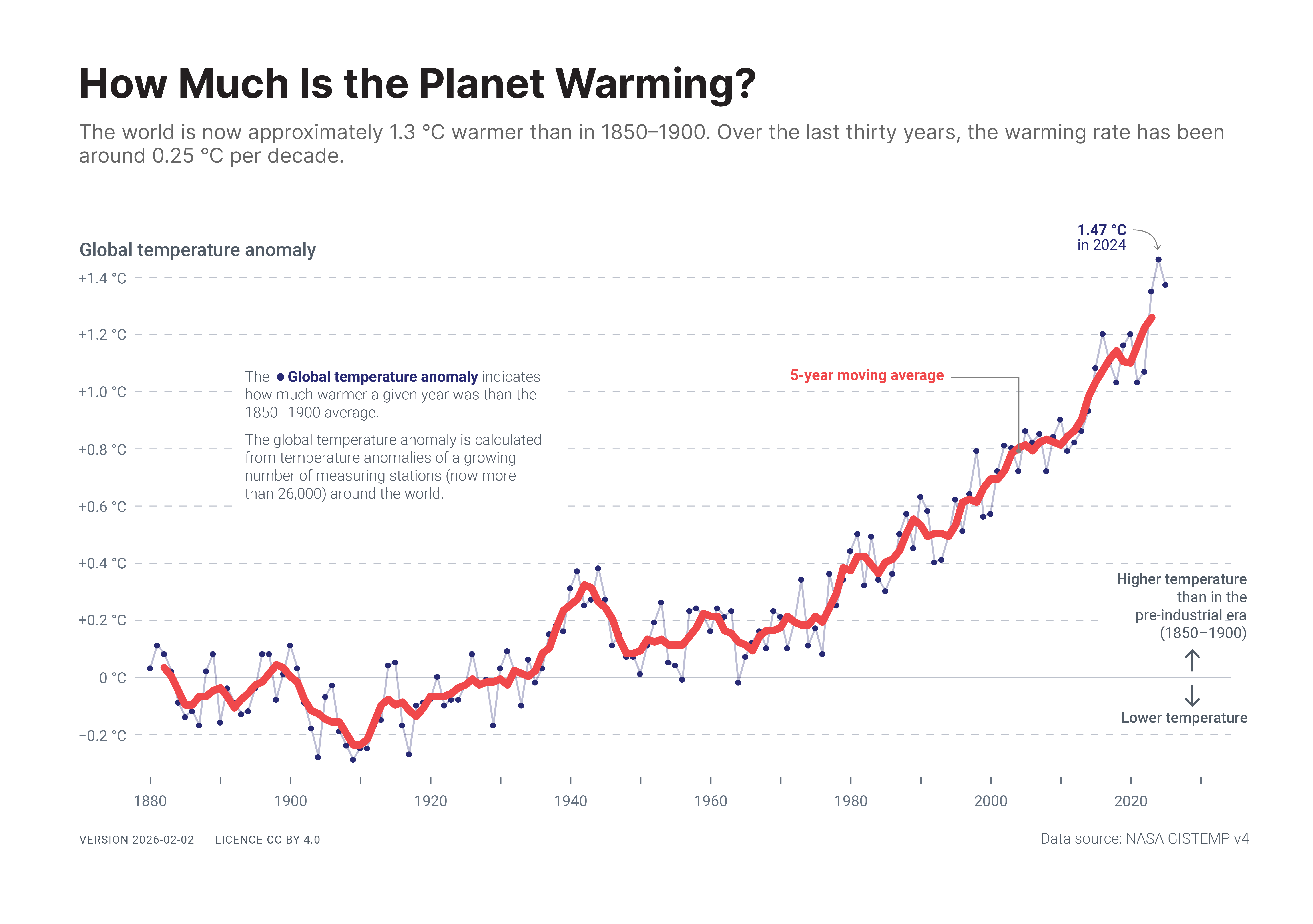
How Much Is the Planet Warming?
The world is now approximately 1.3 °C warmer than in 1850–1900. Over the last thirty years, the warming rate has been around 0.25 °C per decade.
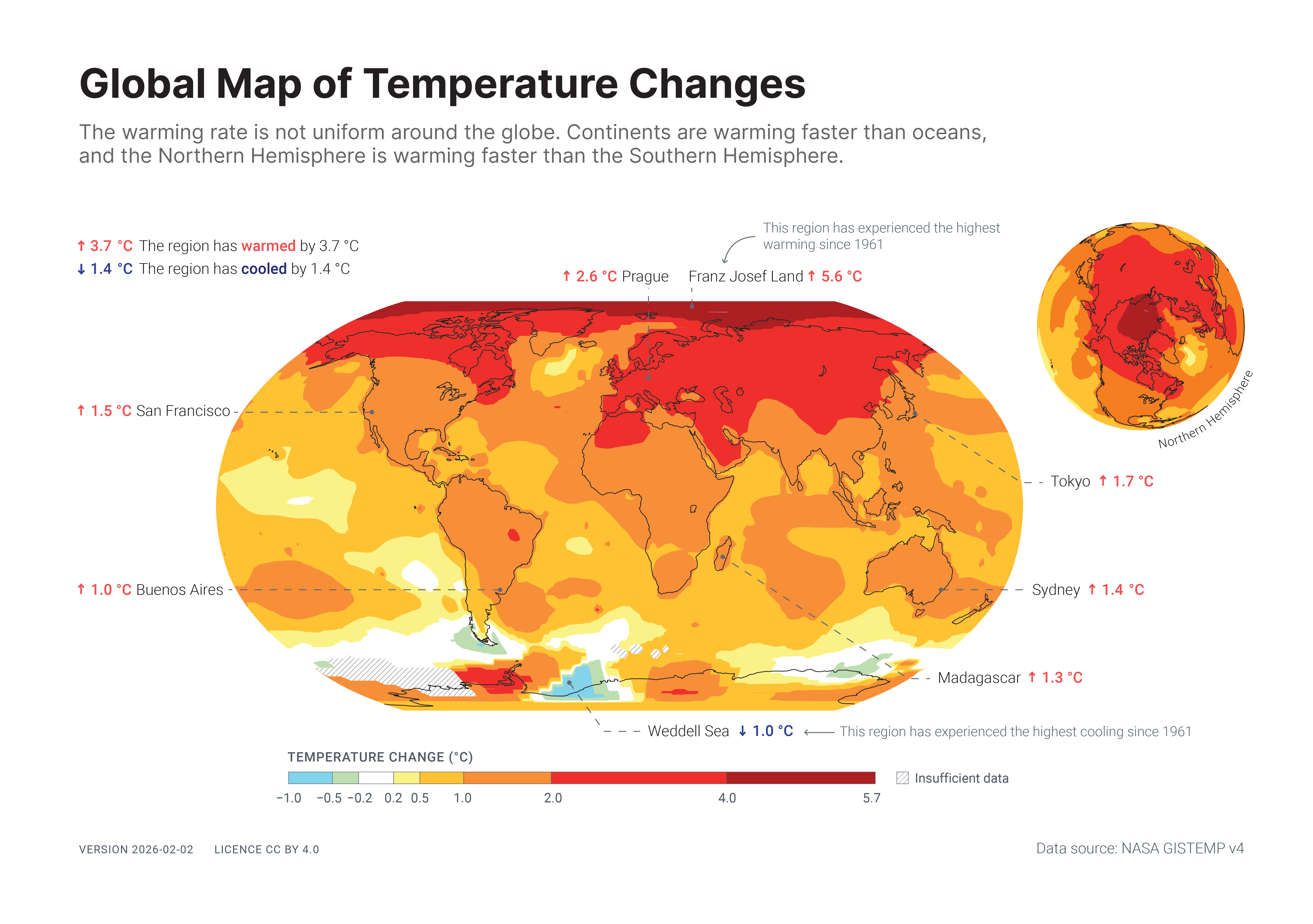
Global Map of Temperature Changes
The warming rate is not uniform around the globe. Continents warm faster than oceans, and the Northern Hemisphere faster than the Southern.
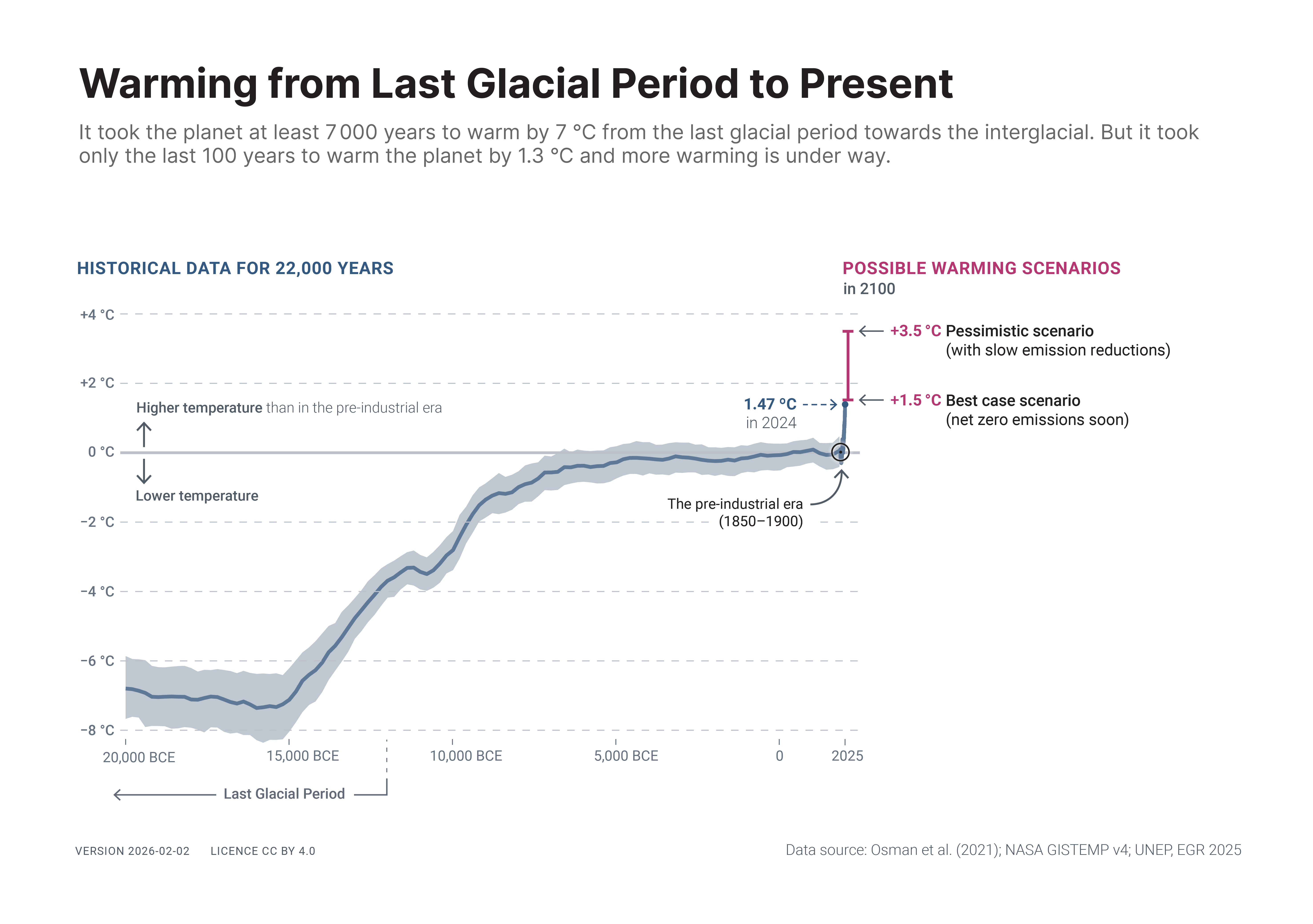
Warming from the Last Glacial Period to the Present
It took the planet at least 7,000 years to warm by 7 °C from the last glacial period. It took only the last 100 years to warm by 1.3 °C.
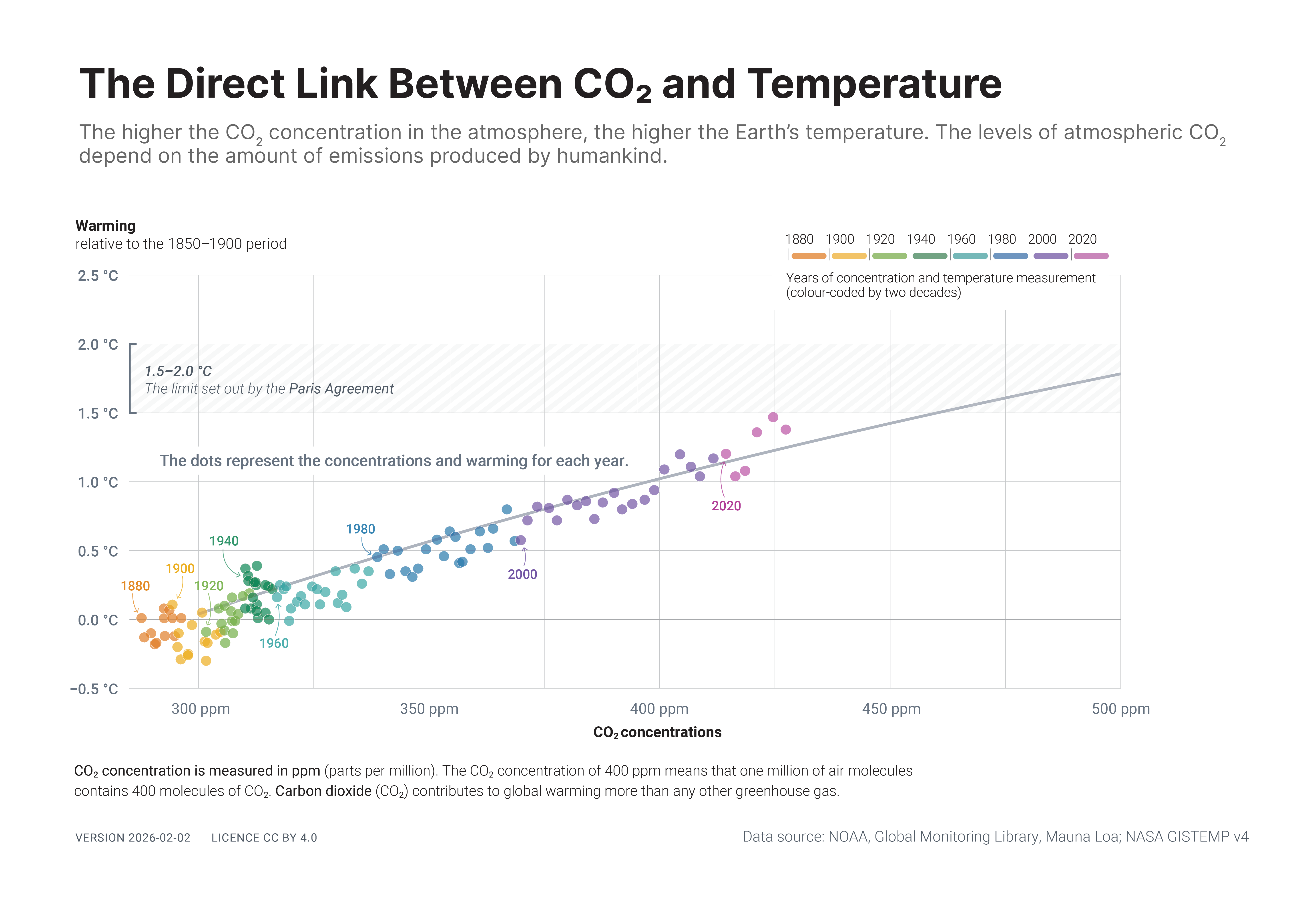
The Direct Link Between CO₂ and Temperature
The higher the CO₂ concentration in the atmosphere, the higher the Earth's temperature.
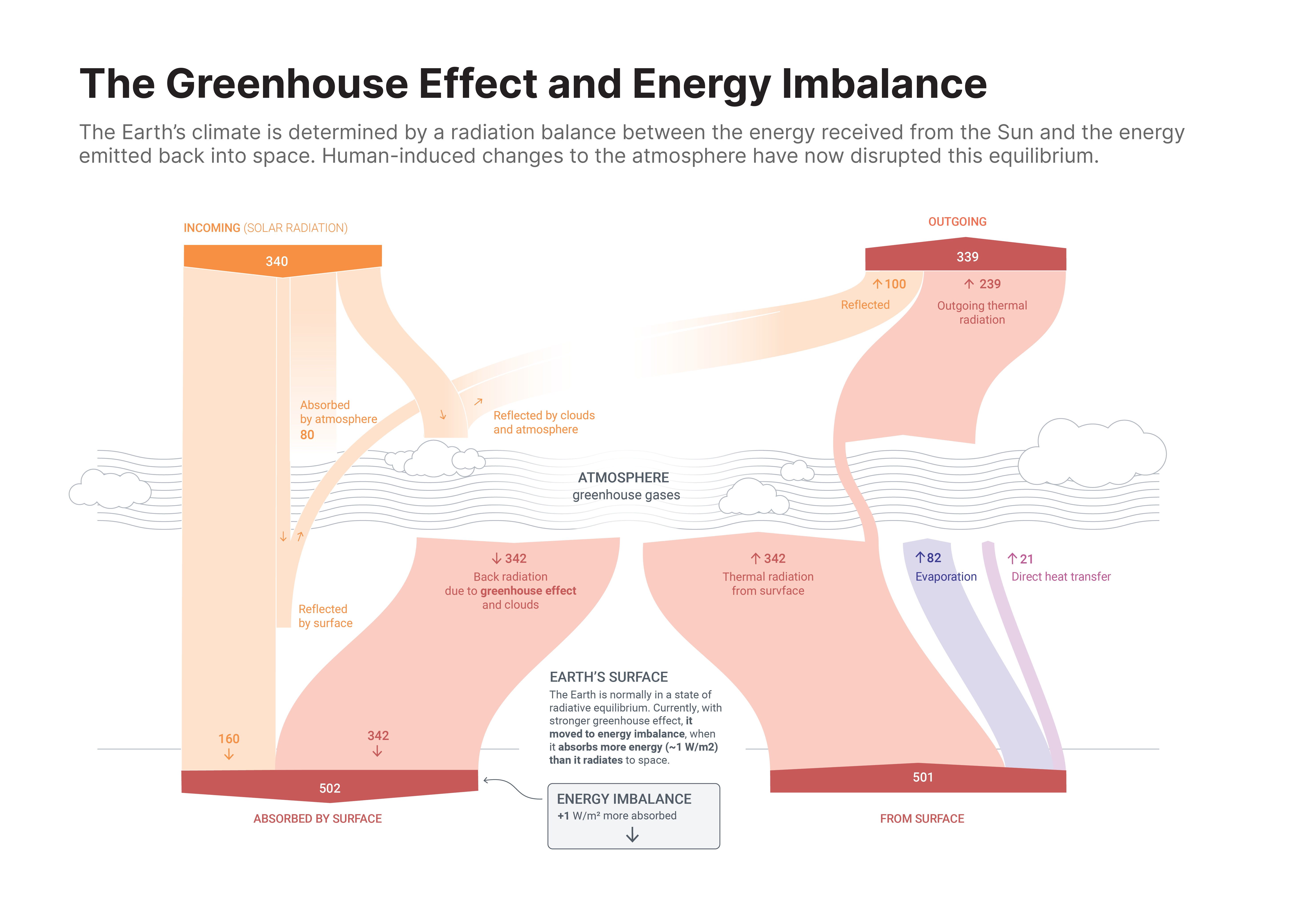
The Greenhouse Effect and Energy Imbalance
Earth's climate is set by a balance between energy from the Sun and energy radiated back to space. Human activity has now disrupted this equilibrium.
A Changing Planet
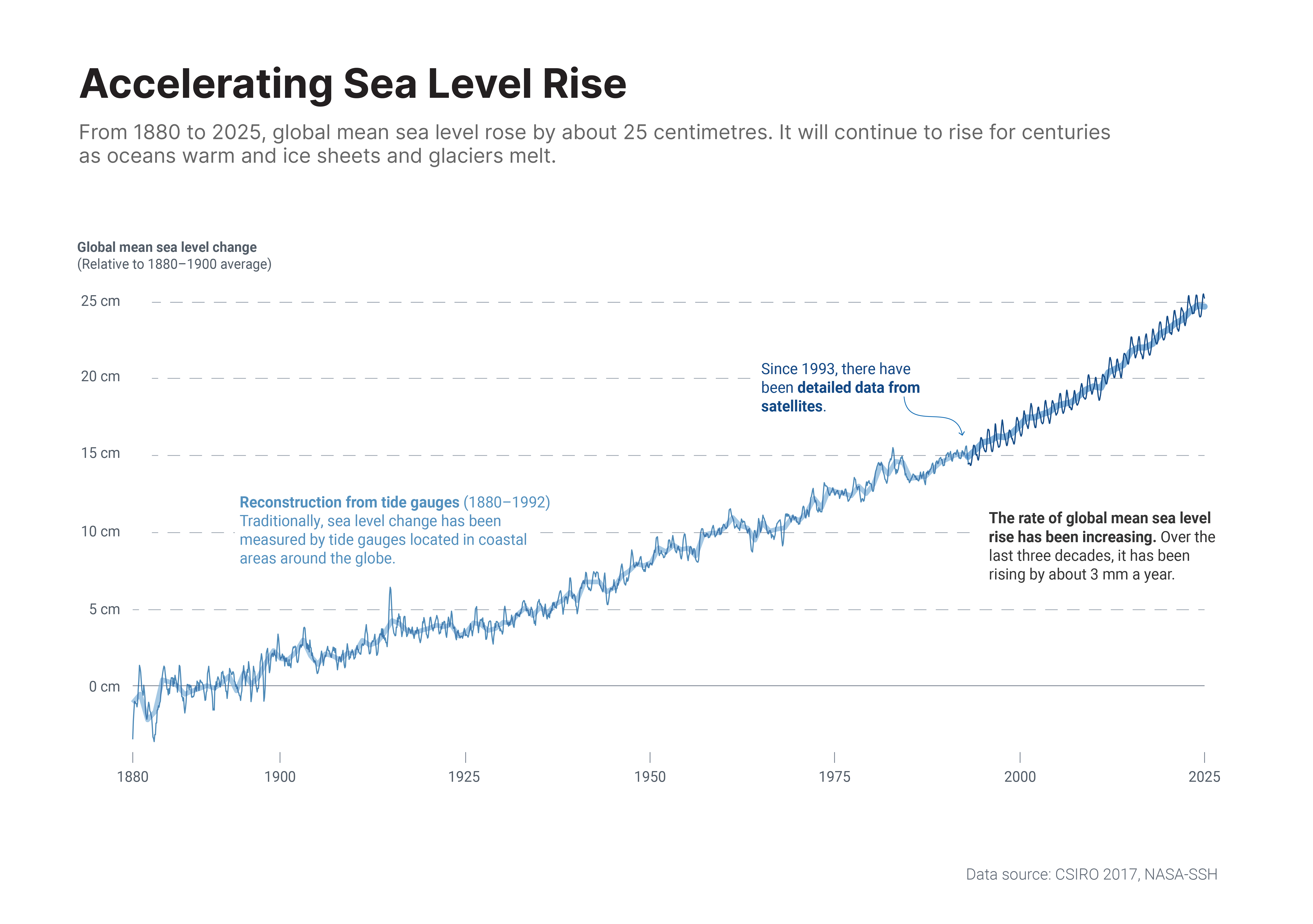
Accelerating Sea Level Rise
From 1880 to 2025, global mean sea level rose by about 25 centimetres — and it will keep rising for centuries.
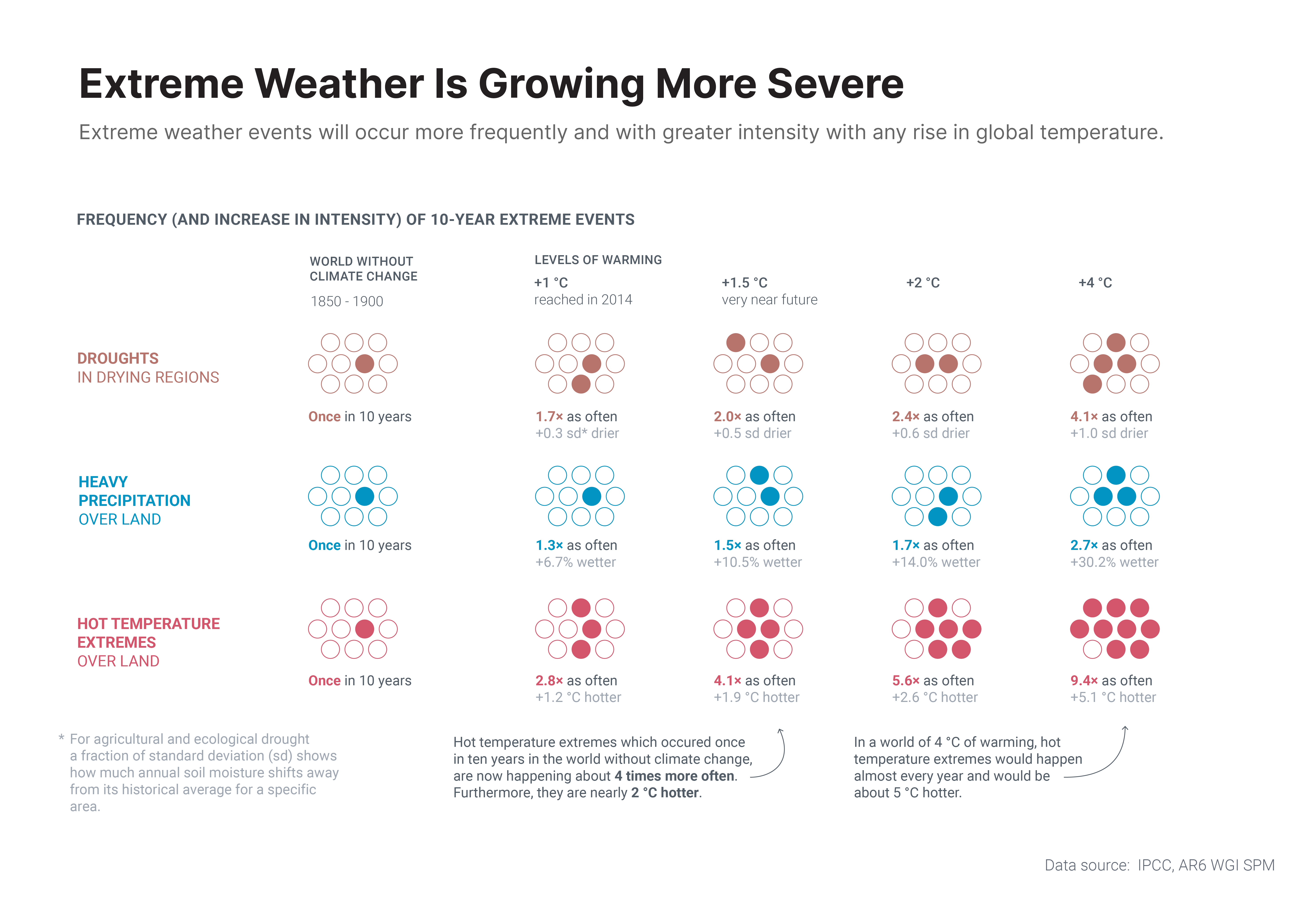
Extreme Weather Is Growing More Severe
Extreme weather events occur more frequently and with greater intensity with any rise in global temperature.
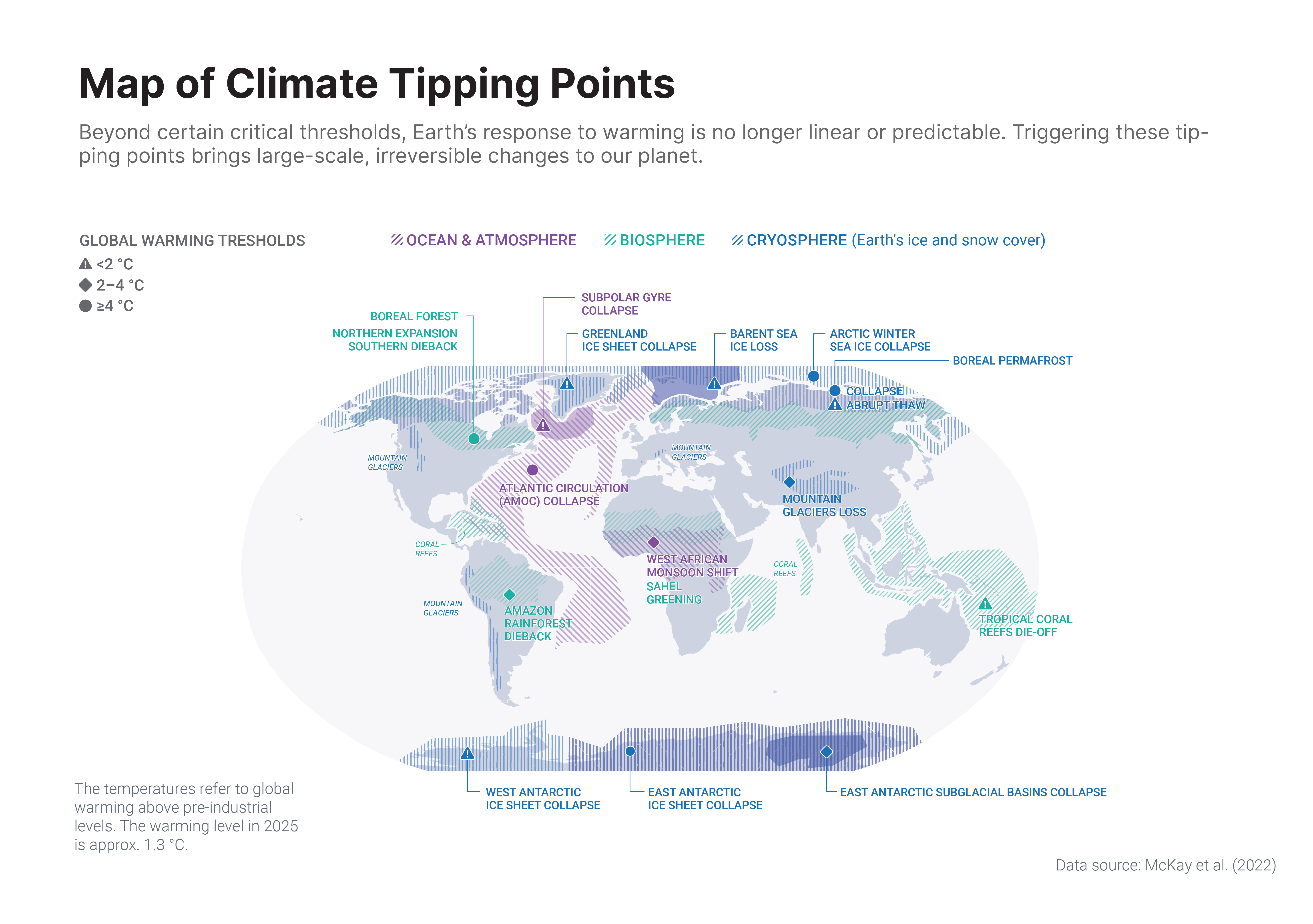
Map of Climate Tipping Points
Beyond certain critical thresholds, Earth's response to warming is no longer linear or predictable.
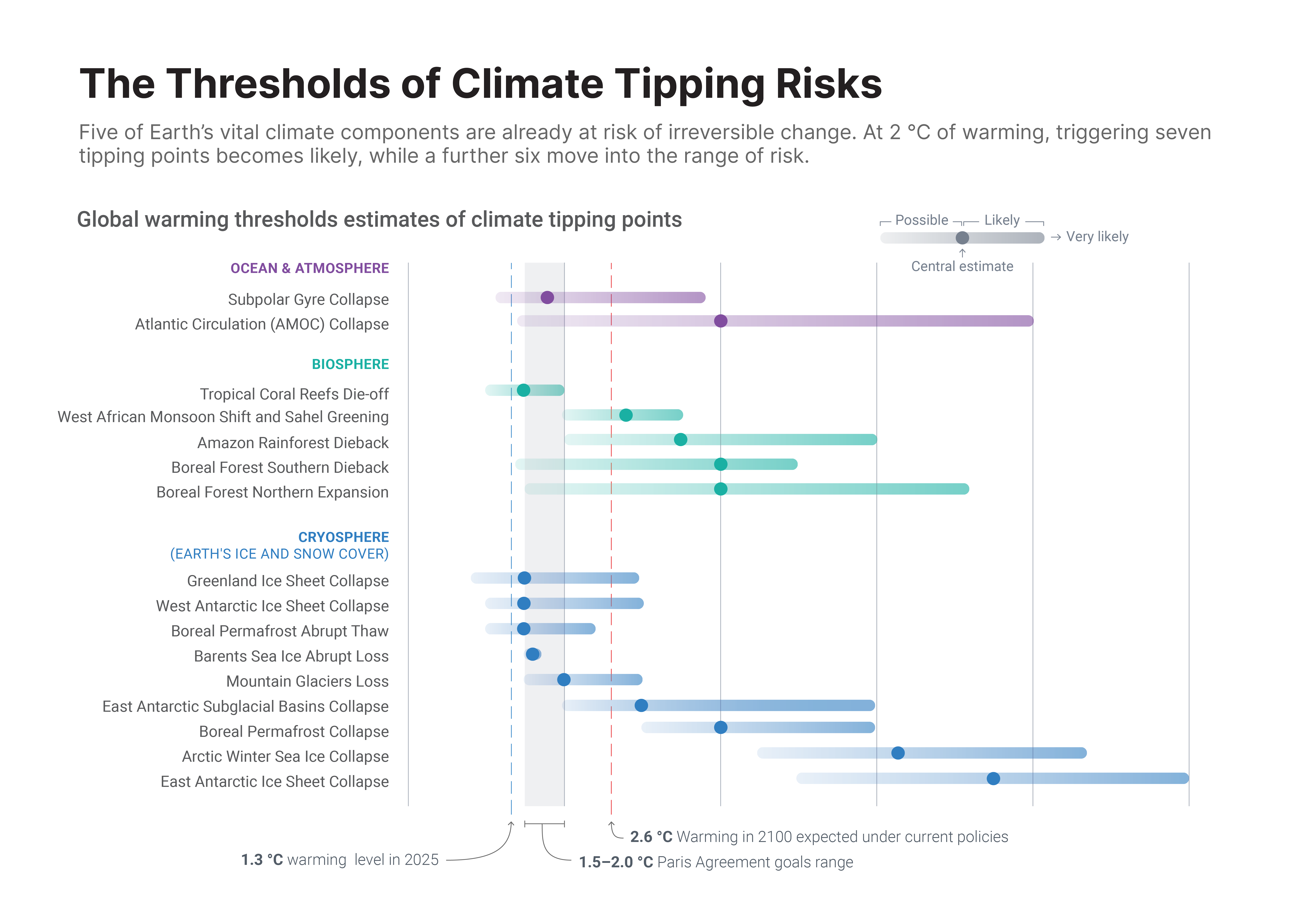
The Thresholds of Climate Tipping Risks
Five of Earth's vital climate components are already at risk of irreversible change.
Emissions and Future Warming
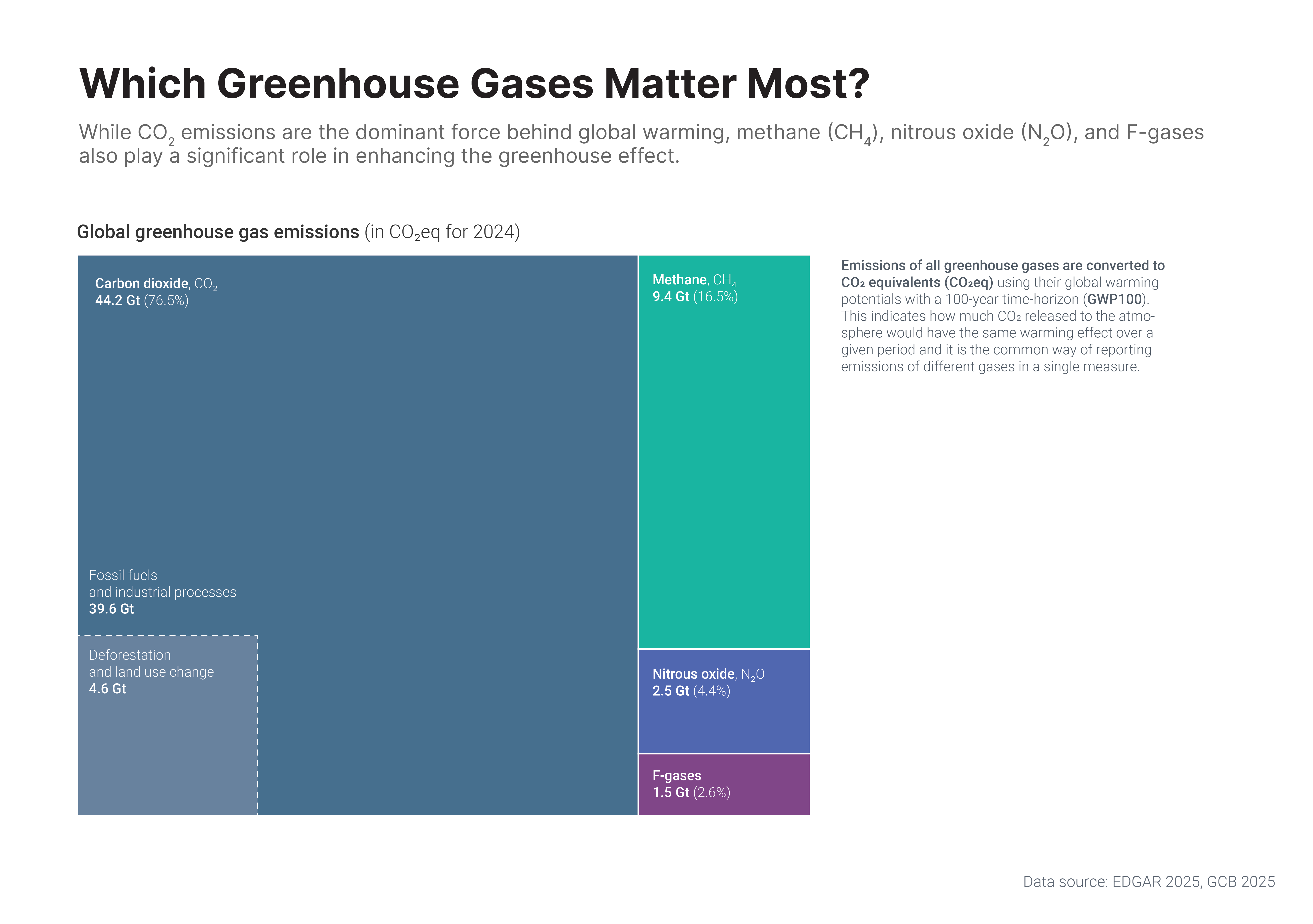
Which Greenhouse Gases Matter Most?
While CO₂ emissions are the dominant force behind warming, methane, nitrous oxide, and F-gases also play a significant role.
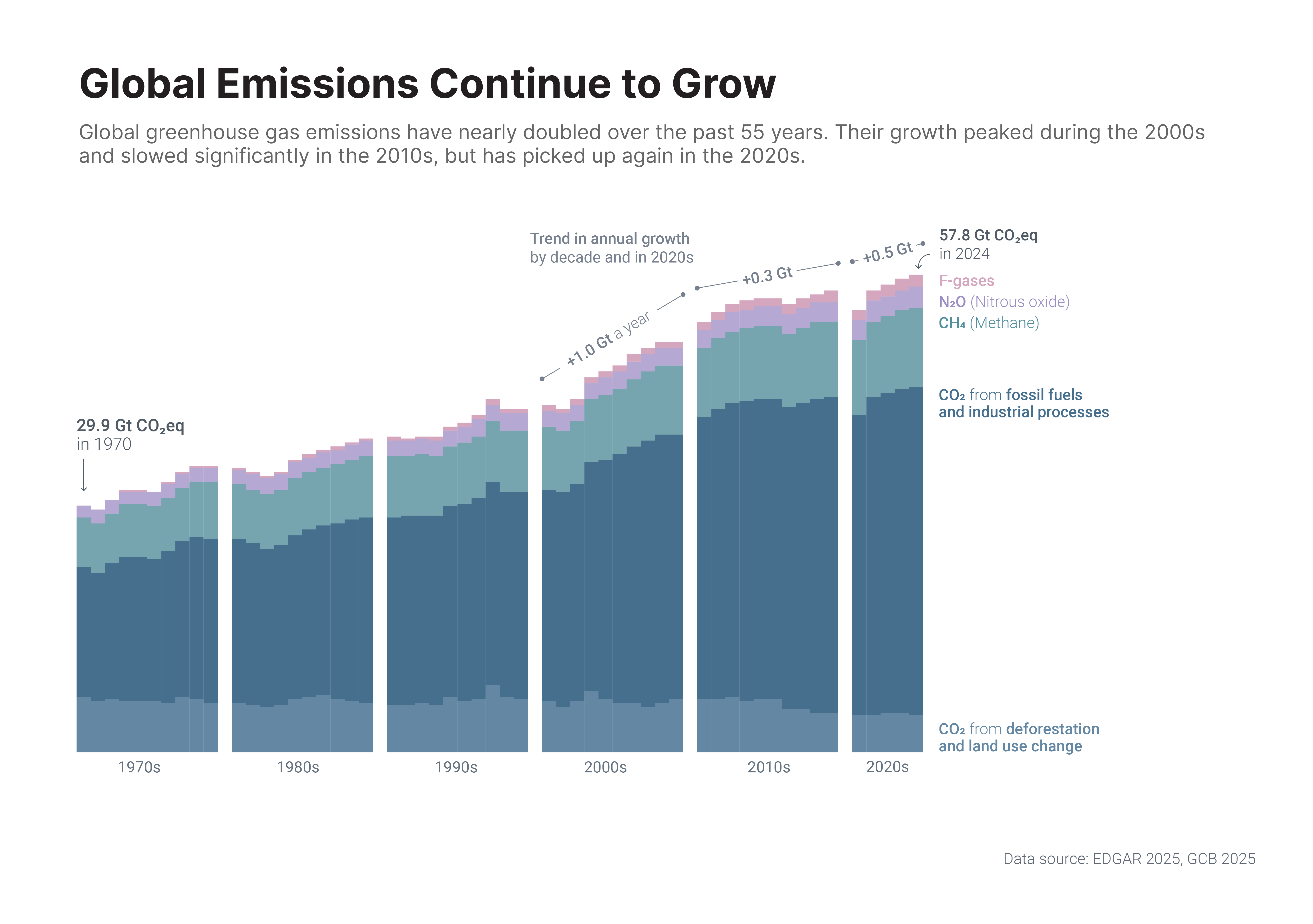
Global Emissions Continue to Grow
Global greenhouse gas emissions have nearly doubled over the past 55 years.
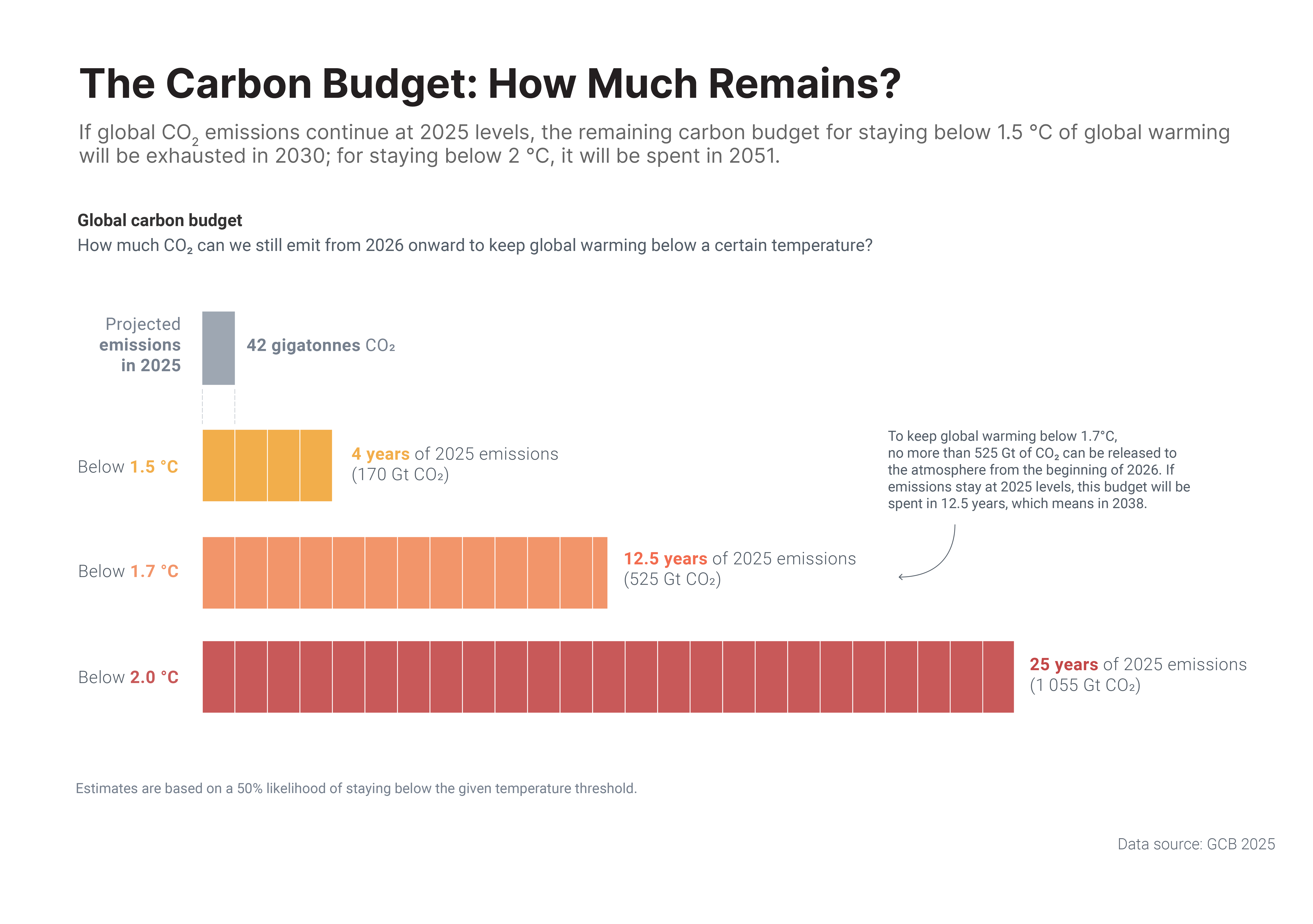
The Carbon Budget: How Much Remains?
If emissions continue at 2025 levels, the remaining carbon budget for staying below 1.5 °C will be exhausted in 2030.
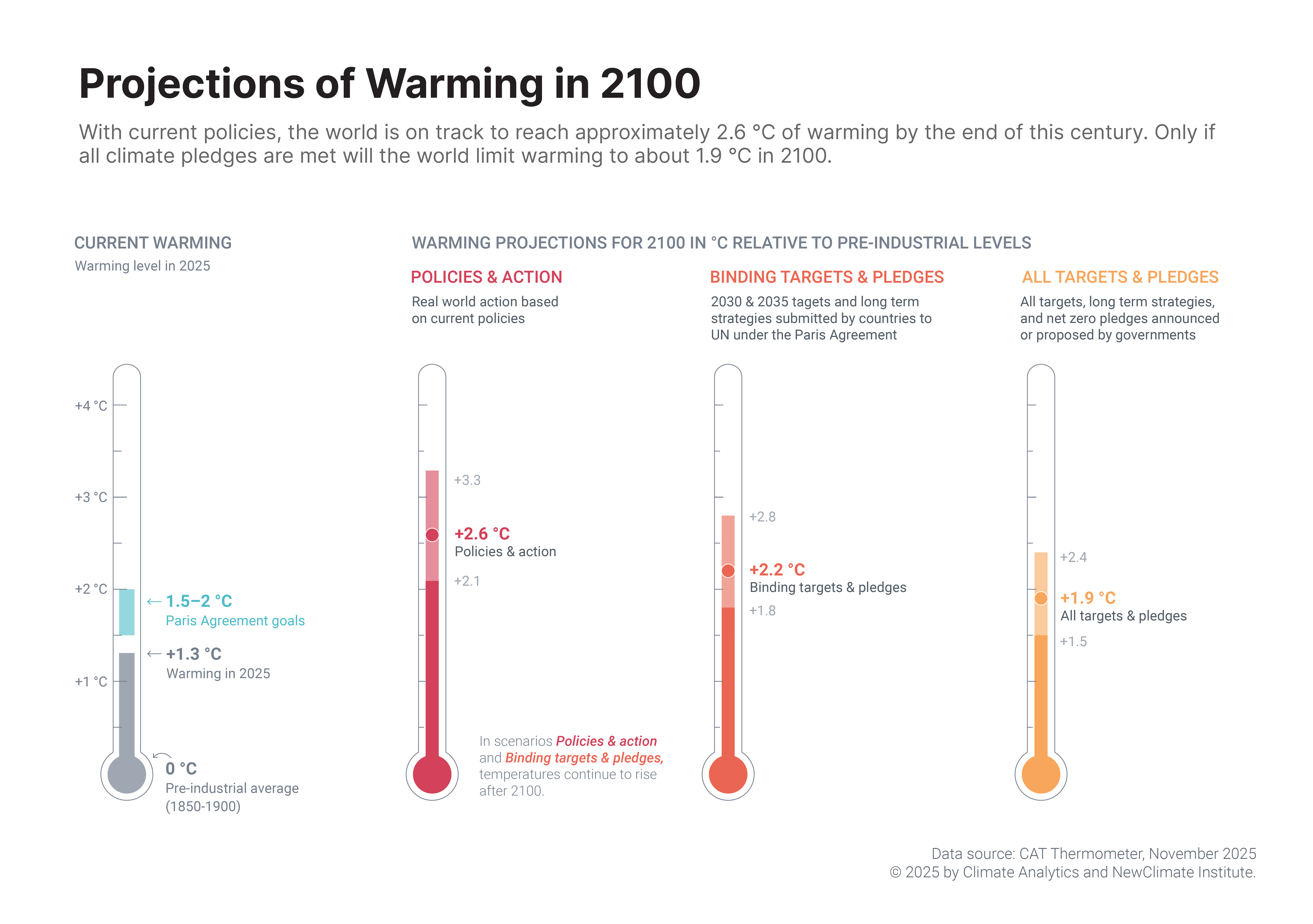
Projections of Warming in 2100
With current policies, the world is on track for about 2.6 °C of warming by the end of this century.
Pathways to Change
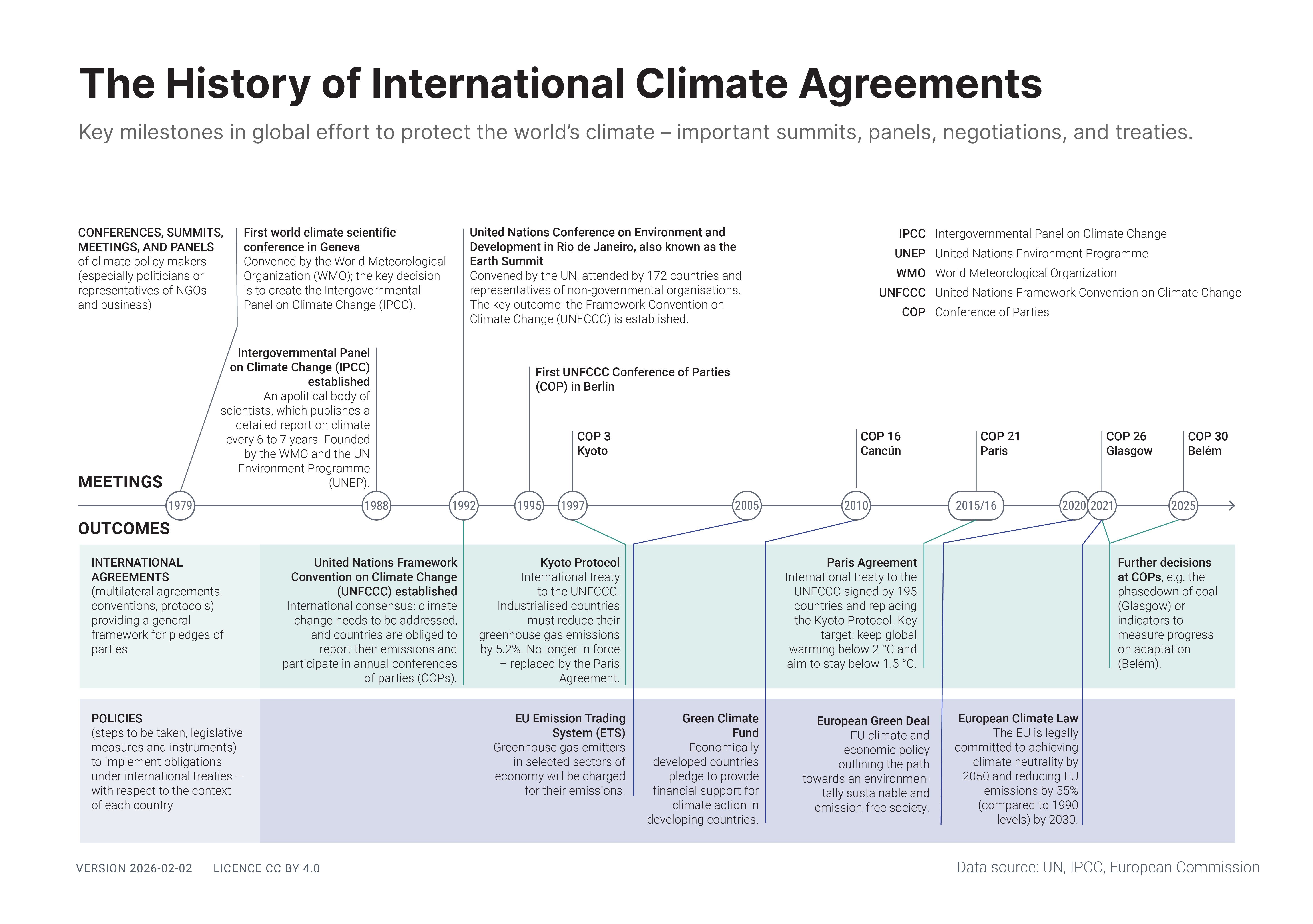
The History of International Climate Agreements
Key milestones in the global effort to protect the climate — summits, panels, negotiations, and treaties.
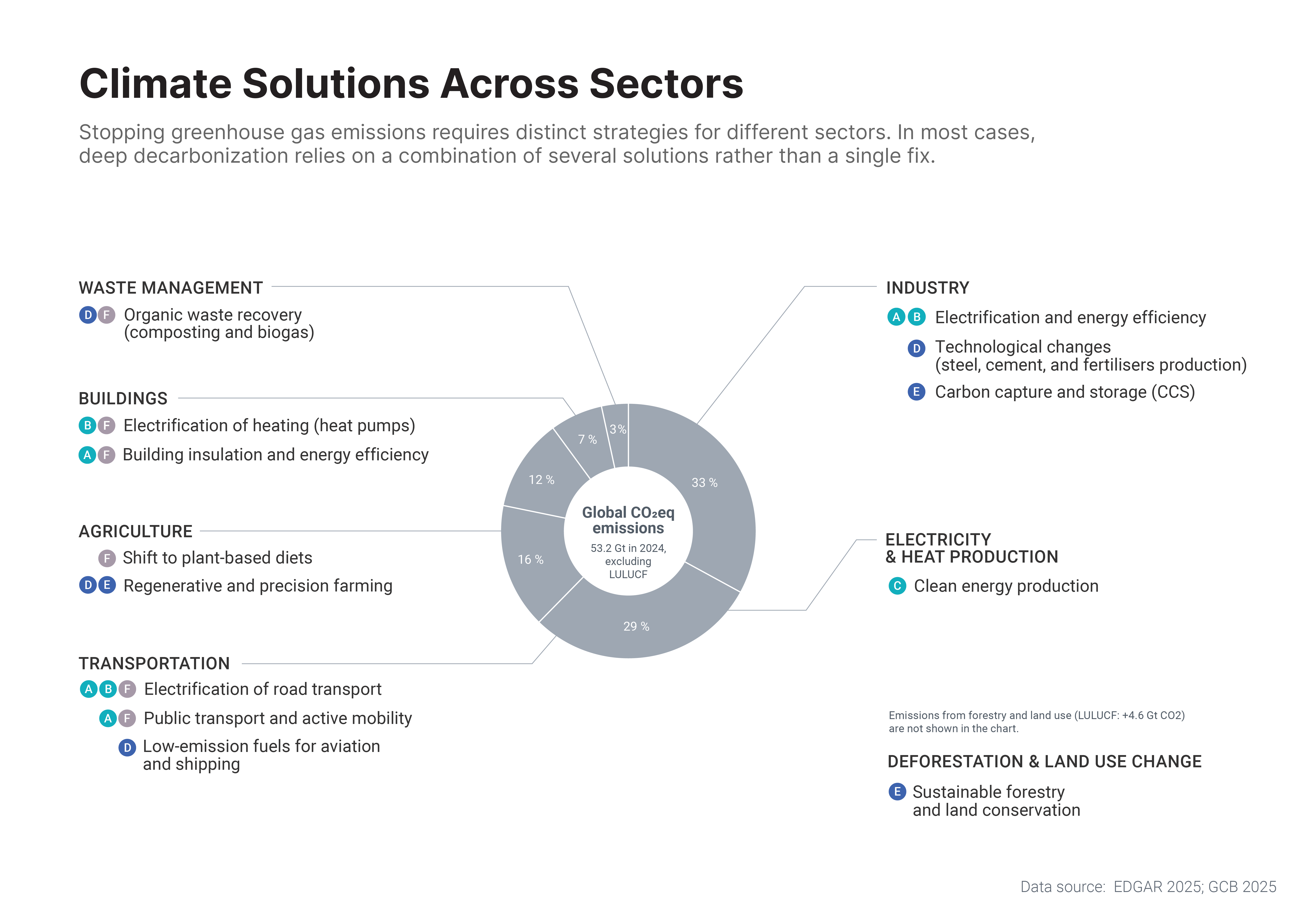
Climate Solutions Across Sectors
Stopping greenhouse gas emissions requires distinct strategies for different sectors of the economy.
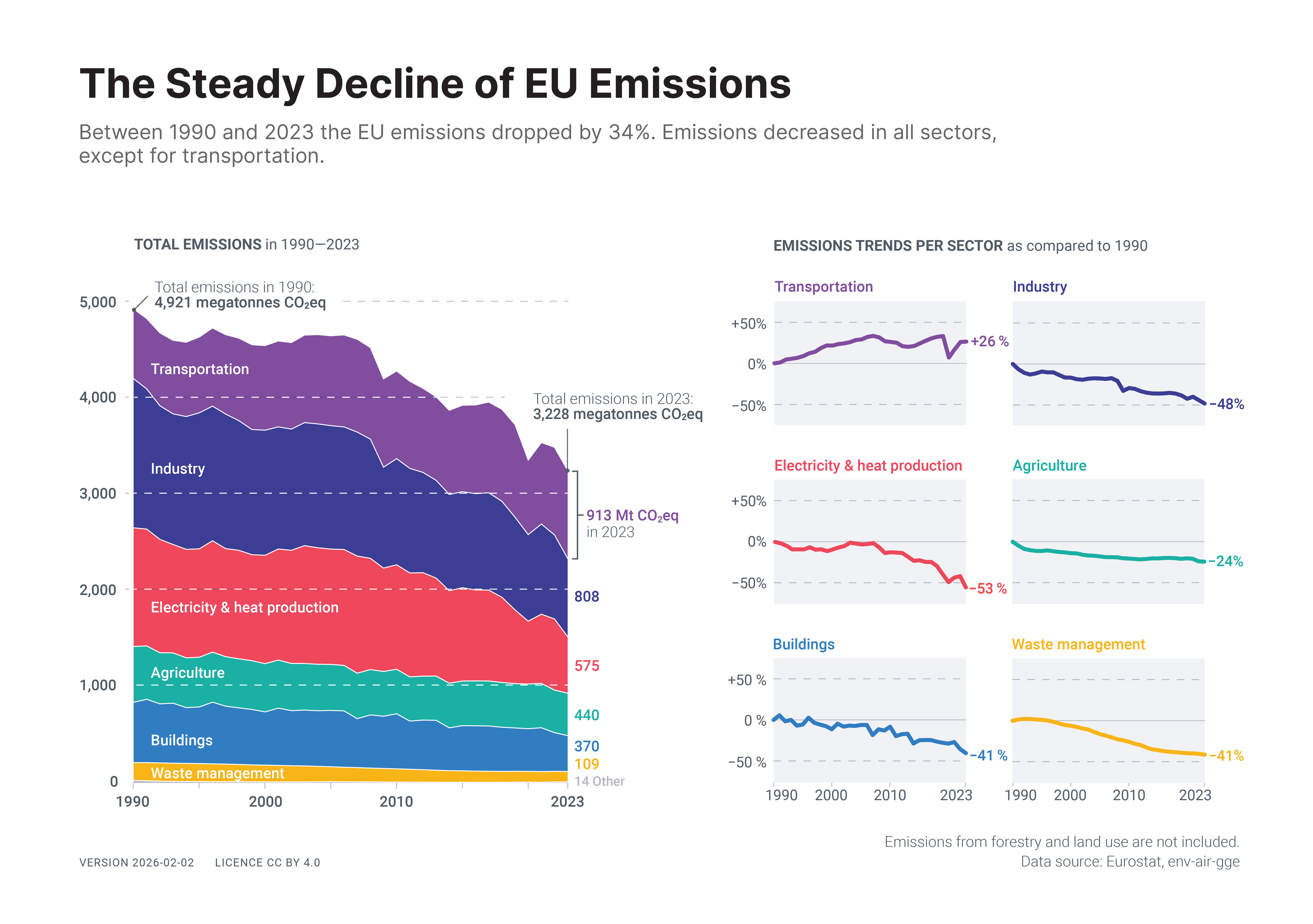
The Steady Decline of EU Emissions
Between 1990 and 2024, EU emissions dropped by over one third — decreasing in every sector except transportation.
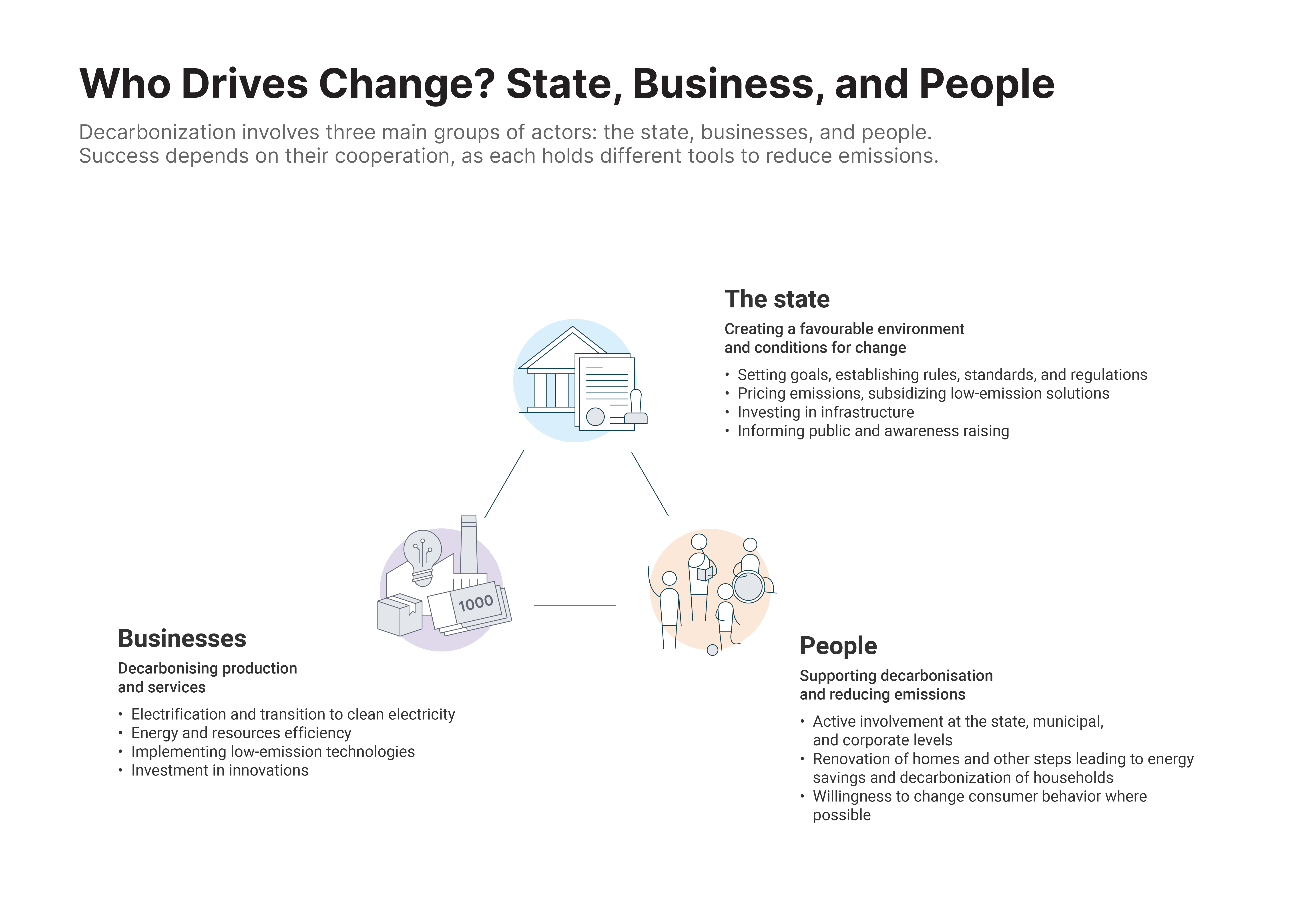
Who Drives Change? State, Business, and People
Decarbonization involves three main groups of actors: the state, businesses, and people. Success depends on their cooperation.